Preserving and Enabling Access to Historical Ecological Data
Vegetation Type Mapping (VTM)- UC Berkeley Department of Environmental Science, Policy, and Management
- Geospatial Innovation Facility, UC Berkeley
- Holos, Berkeley Ecoinformatics Engine
Context & Problem
Understanding long-term ecological change requires reliable historical baselines, yet much of California’s early ecological survey data existed in fragile, analog, or inaccessible formats. Vegetation surveys conducted in the 1920s and 1930s — including maps, photographs, and plot records — represented a uniquely valuable snapshot of pre-modern California ecosystems, but were difficult for researchers to discover, interpret, or reuse.
The core challenge was not generating new data, but rescuing, structuring, and presenting legacy ecological information in a way that made it usable for modern scientific and conservation work.
What the Product Is
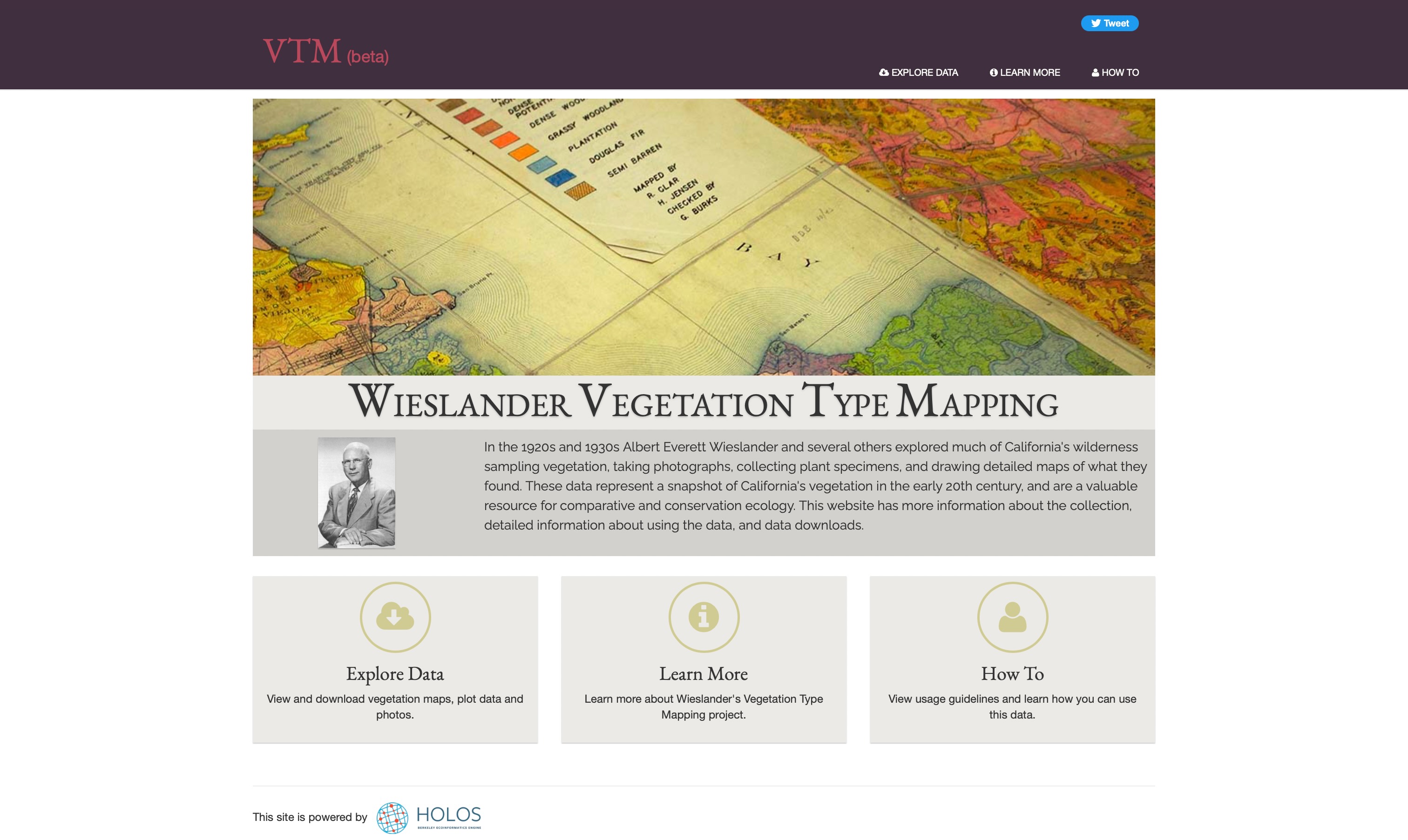
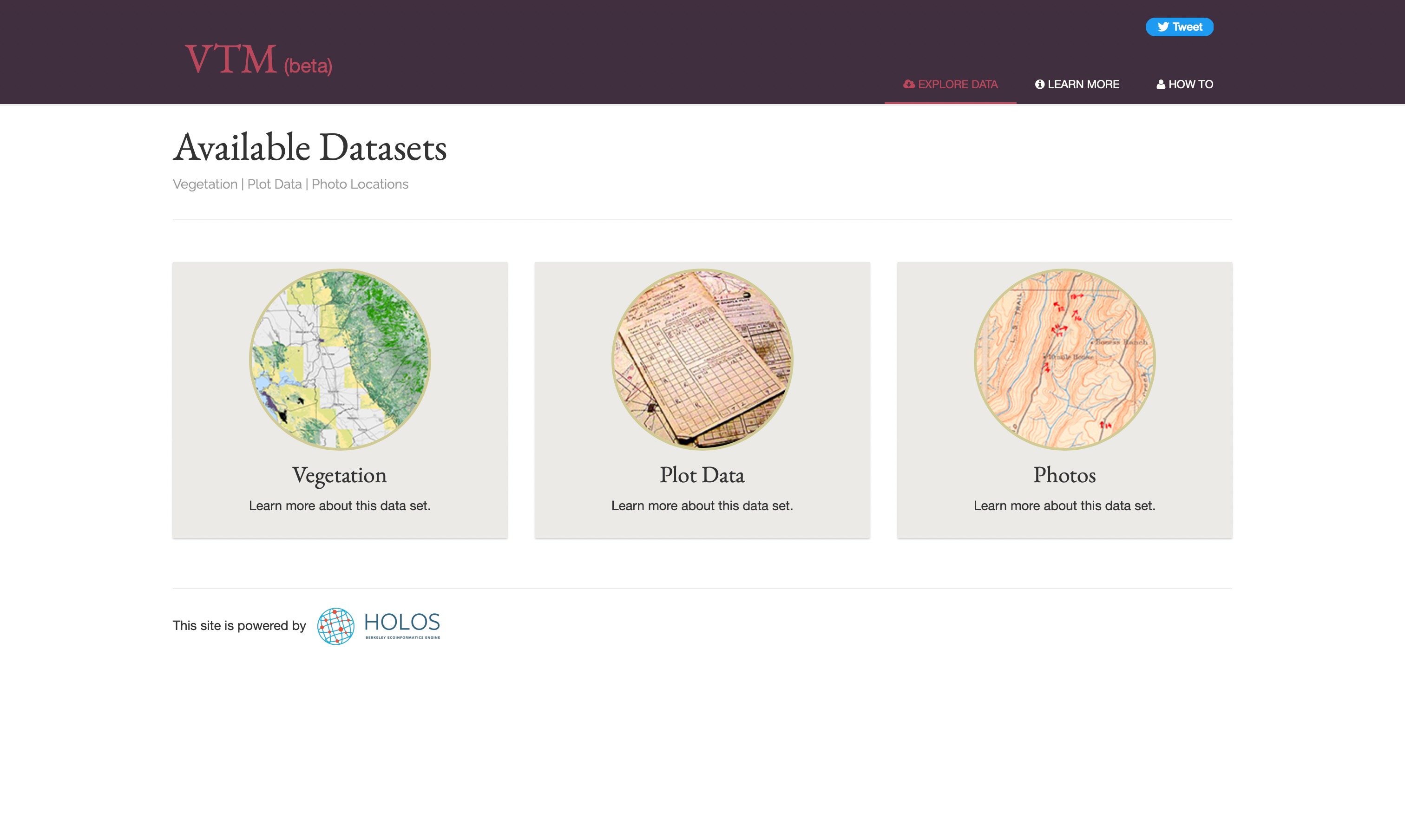
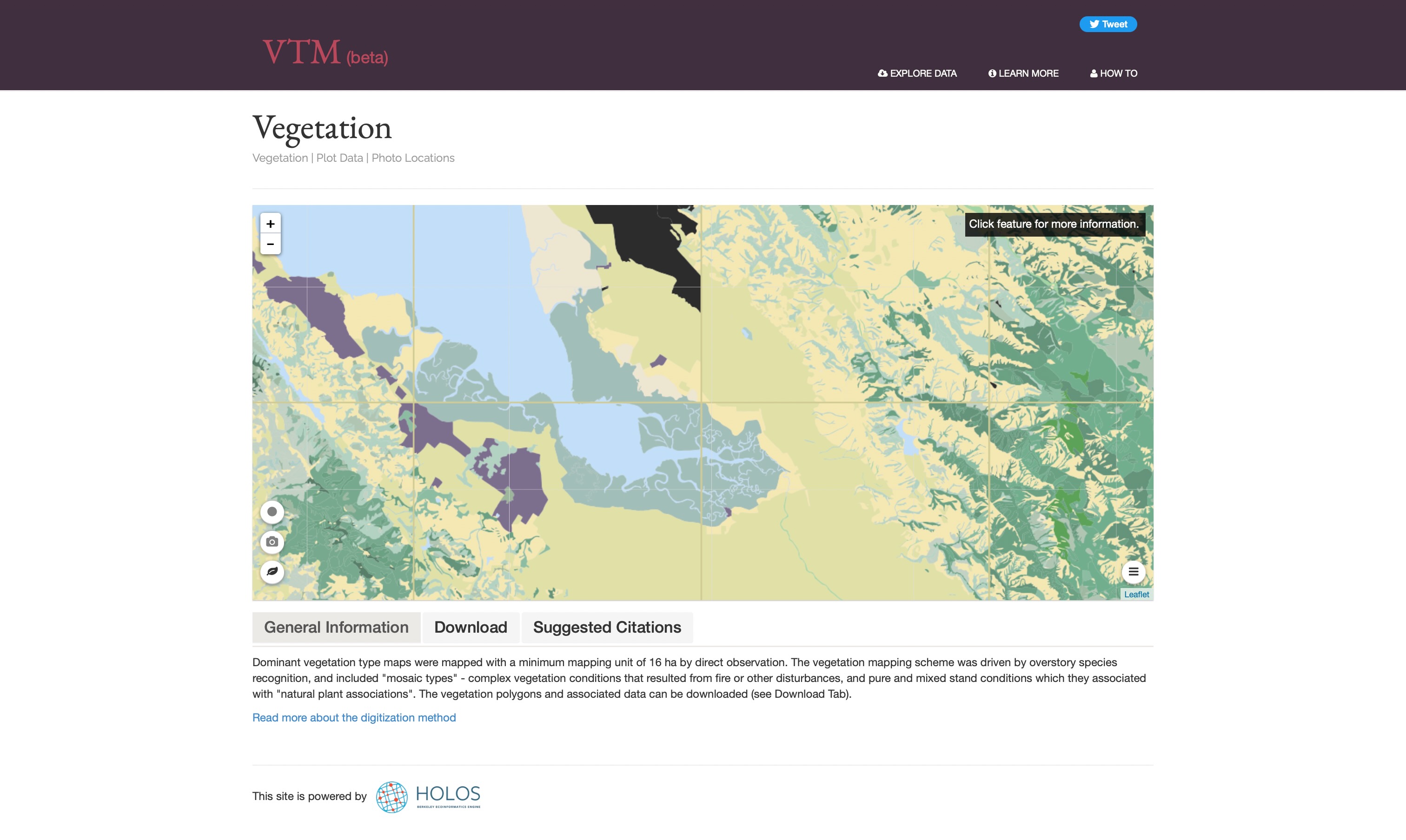
Vegetation Type Mapping (VTM) is a public web platform that brings together historical vegetation maps, plot locations, and photographs from the Wieslander surveys into a unified, map-based exploratory experience. The product enables researchers and practitioners to browse datasets spatially, connect visual records to geographic locations, and use historical ecology as a comparative baseline for contemporary analysis.
Rather than serving as a static archive, the site was designed as an exploratory research tool that bridges early 20th-century field surveys with modern, digital ecological workflows.
My Role
Working with the UC Berkeley Department of Environmental Science, Policy, and Management and the Geospatial Innovation Facility, I:
-
Led the design and development of the public-facing product, translating complex, research-oriented datasets into an accessible, map-driven interface.
-
Framed the product around spatial exploration, allowing users to discover relationships between vegetation types, plot data, and historical photographs through geography rather than dense tables or documentation.
-
Implemented an interactive mapping experience capable of handling large numbers of spatial points, surfacing early performance and data-visualization tradeoffs inherent in browser-based mapping tools at the time.
Impact & Outcomes
Data Preservation Helped transform fragile, historical ecological records into a durable, digital public resource.
Research Enablement Enabled ecologists, conservation scientists, and land managers to use early-20th-century vegetation data as a baseline for studying environmental change.
Accessible Archives Shifted historical survey materials from a static archive into an exploratory, spatial product usable by a broader audience.
Product Insight Deepened understanding of how interface design and data structure choices shape whether scientific data can be meaningfully reused beyond its original context.
Product Showcase