Enabling Programmatic Access to Climate Data for Researchers and Developers
Cal-Adapt API- California Energy Commission
- Strategic Growth Council
- Geospatial Innovation Facility, UC Berkeley
Context & Problem
While the Cal-Adapt platform made climate projections accessible through interactive tools, a growing audience of researchers, analysts, and technical practitioners needed direct, programmatic access to the underlying data. The API existed, but without clear guidance it was difficult for users to understand available endpoints, data structures, or how to integrate climate data into their own workflows.
The challenge was lowering the cognitive and technical barriers required to use the API correctly and confidently, especially for users unfamiliar with climate data conventions or the Cal-Adapt data model.
What the Product Is
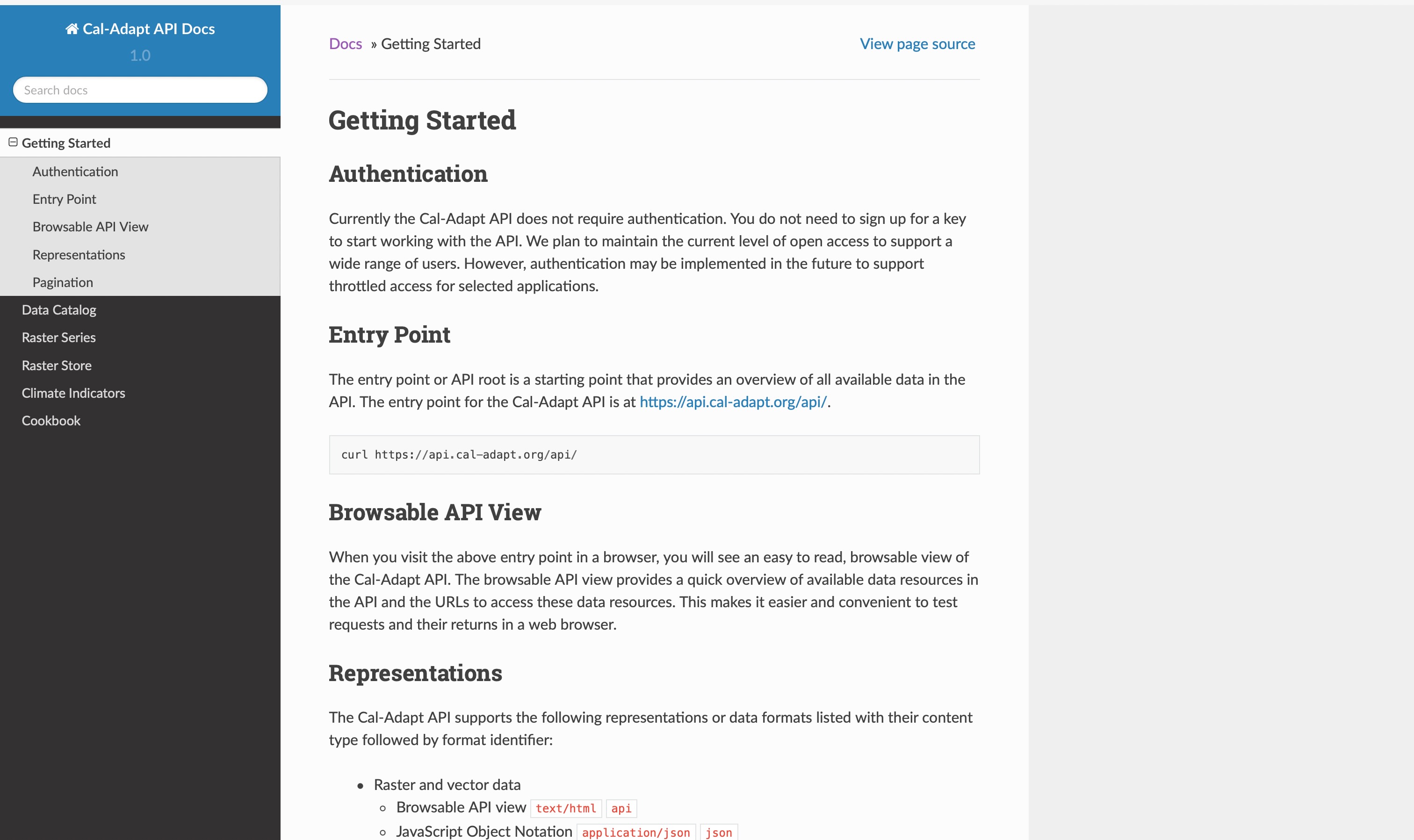
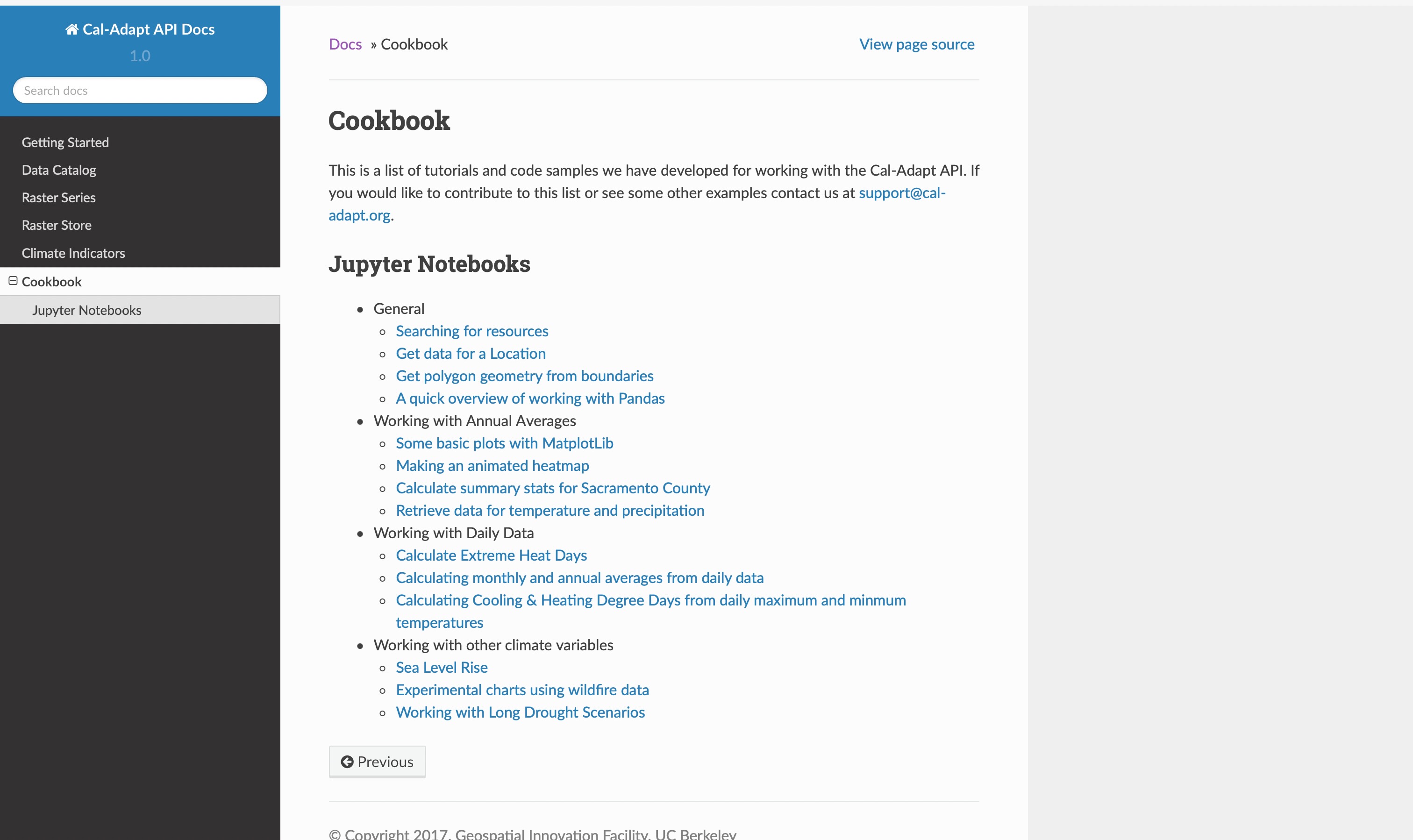
The Cal-Adapt API Documentation is a developer-facing product that explains how to access, query, and apply California climate projection data programmatically. It combines reference documentation with practical tutorials and example workflows, bridging the gap between raw API endpoints and real-world research or planning use cases.
Rather than serving as a static reference, the documentation was designed to support learning, experimentation, and reuse enabling users to move from first request to meaningful analysis.
My Role
Working as part of the Cal-Adapt team alongside the California Energy Commission and the Strategic Growth Council, I:
-
Designed and implemented the documentation system using a structured, maintainable stack aligned with common Python and open-source conventions.
-
Defined the information architecture for the docs, balancing completeness with approachability for users with varying levels of technical experience.
-
Authored tutorials, code samples, and “cookbook” examples that demonstrated how to apply the API to common climate data use cases, allowing users to see both code and outputs in context and adapt examples to their own analyses.
Impact & Outcomes
Lower Barrier to Entry Enabled researchers and developers to begin using Cal-Adapt data programmatically without extensive back-and-forth support.
Expanded Use Cases Supported downstream analysis, modeling, and integration of climate data into external tools and decision-support systems.
Scalable Support Reduced reliance on one-to-one assistance by providing clear, reusable documentation and examples.
Product Insight Reinforced that documentation is a core product surface, shaping who can use a platform, how confidently, and for what purposes.
Product Showcase